
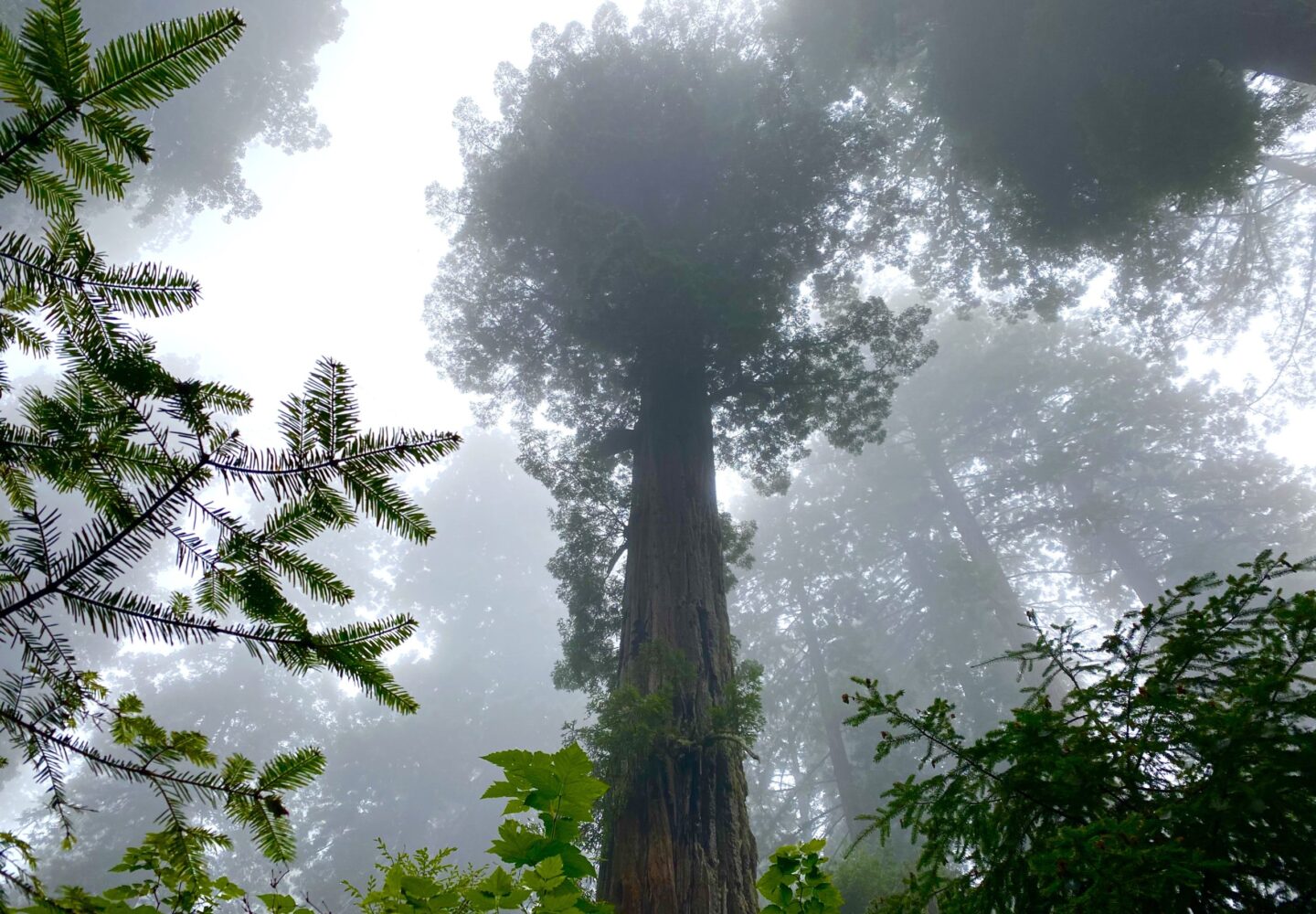
Maybe you’ve heard the alarming stats before. Every 6 seconds, Earth loses a soccer field of virgin rainforest. And 95 percent of Pacific Northwest ancient forests are gone, and still being logged. But have you heard about the simple ways to protect old-growth? Scroll down to explore the ultimate guide on how each of us could protect some of the world’s most important ecosystems.
- Replace paper towels
- Buy eco-friendly toilet paper
- Find forest-free packaging
- Carry a reusable cup
- Shop tree-free clothes
- Buy green furniture
- Support organizations protecting forests
Paper product alternatives
Replacing paper towels
The paper towel’s prevalence in the western world, with its behemoth contribution to disappearing forests, is the reason the Tree Saving Kit and Guide exist. If Americans could embark a new relationship with paper towels, we would catalyze saving the last forests from unnecessary logging. “The U.S. spends nearly as much on paper towels as every other country in the world combined,” the Atlantic states. Paper towels are convenient because they seamlessly fulfill three roles: napkins, cleaning and drying. However, fabric napkins, dish towels and cleaning cloths provide a simple switch and can add fun design elements to the kitchen, without a side of deforestation.
Eco-friendly toilet paper
Although Americans only make up 4 percent of the population, we use over 20 percent of the world’s toilet paper supply. In addition, our (particularly American) demand for the softest of the soft has led big corporations to deny using more sustainable materials in their lines of toilet paper, which is significantly adding to deforestation. Part of the problem is that the super-soft, ultra-quilted, multi-ply toilet paper we have come to prefer comes directly from the long fibers of virgin pulp (trees). The good news is, not all toilet paper is created equally. Some brands use more recycled fibers than straight virgin tree pulp, and a number of independent toilet paper companies are coming to rise offering some of the most sustainable toilet paper on the market. We included Save Trees (formerly Cloud Paper) in our starter kits.
Forest-friendly packaging
The surge in online shopping is real. And with it: an increase in demand for packaging materials. Actually, many of the things we buy, even locally, are wrapped up in boxes, sometimes even a box within a box. While e-commerce makes the situation worse shipping packages, even buying a blender, a pair of shoes or a set of lightbulbs uses cardboard to package the products. Also, as many companies and restaurants have steered away from single-use plastics, paper products have become the go-to alternative.
A few solutions:
- Support businesses on Canopy’s Pack4Good initiative; message your favorite stores that could easily reduce their cardboard habits
- When possible, skip the ship (many stores offer curbside pickup for items beyond just groceries)
- Use household products that have sustainable packaging, like Seventh Generation’s new 100% recycled shell
- Shop zero-waste sites like Eco Collective that focuses on products with very little packaging
Reusable cups
Each year, 10 to 20 million trees (yes, million) fall to make paper cups, according to the Boston Globe and ReThink Disposables. Most of those cups are “coated with a fossil fuel-derived plastic called polyethylene.” This plastic lining makes paper cups tricky to recycle. Meaning, only a small percent of facilities in North America take them. Most of us throw cups in the blue bin, thinking they’ll end up recycled, and feel only half bad about forgetting to bring a reusable one to the coffee shop… for the hundredth day in a row. We’ve been there.
Only three paper recycling mills in the U.S. process plastic-coated paper, so more than 50 billion paper cups end up in the landfill each year. Although waste management solutions are progressing, creating cups and then recycling them uses a considerable amount of resources (including depleting forests and water reserves) and leaks toxins into our environment and bodies. Plus, disposables don’t hold heat and cold the way innovative insulation does, and they emit toxic particles into drinks. With 120 billion cups being used by Americans annually, including plastic and styrofoam, we all have an opportunity to make a simple switch for the planet.
Forest saving lifestyle tips
Eco-friendly clothes
In the Pacific Northwest, 80 to 90 percent of primary forest has been clearcut or altered in some way. Many of us unknowingly contribute to its downfall. Like a forensic scene, a camera could dive into the average hikers’ attire in Olympic National Park or Cathedral Grove and find evidence of old-growth trees woven into clothes. Everything from our dresses and pants to tablecloths and towels could contain remnants of endangered forests from the Amazon, Indonesia and North America. In the coastal temperate rainforest, most viscose-rayon products come from Canada’s Great Bear Rainforest, 250 miles of trees along British Columbia’s northern coastline. In a world where the last 1,000-year-old trees are still for sale, many companies are voluntarily committing to old-growth-free fabrics.
Avoiding viscose-rayon and buying organic cotton or bamboo threads offer some alternatives. Until recently, that’s been hard to do if you want the perfect leggings though. Luckily, choices are growing. With companies committing to eliminating trees from the fashion supply chain, major players are making the ethical decisions for consumers. It also leads to just another reason to shop second-hand.
Furniture
Trees turn into home decor in many shapes, from solid wood mainstays to particle board assemblies—containing small bits and chips bonded together with chemicals and glue to form a plank. Manufactured boards make fast furniture light-weight and able to ship in smaller packages. The lifespan, however, is designed to be short—typically around 2 to 5 years before ending up in the trash. Some view manufactured boards as more sustainable than solid wood designs strictly because they’re made from recycled products and byproducts in manufacturing. However, manufacturing in some parts of the world has been notoriously linked to child labor, and the home industry is no exception. And, toxic chemicals leach into the process and final product. Also, the lack of transparency in the timber supply chain creates a mystery around the origins of some trees when they show up at any given mill. To start a greener path, we should look beyond Forest Stewardship Council-certified materials alone, which only address the beginning of the furniture lifecycle. As a rule of thumb, it’s best to not buy new things that you don’t need. But, if it’s finally time to replace that old desk, stay tuned for a few greener options.
Activism and Legislation
Once logged, it would take centuries to restore the type of biodiversity thriving in ancient forests—if even given the chance. Some trees have been thriving above and below the ground’s surface for hundreds of years, other networks for thousands. Coastal temperate rainforests are especially unique as they have more living mass than any other type of forest. Tropical forests hold massive amount of species that are slowly disappearing. That’s why there are groups trying to protect virgin forests all over the planet — from indigenous stewards to environmental activists. The legendary images of hippies camping out in California’s redwoods remains alive in North America today. Many other ancients around the world await the chopping block if we don’t step up to speak for them. In D.C., groups have come together to tediously watchdog Big Timber and their campaign contributions, which inevitably lead to looser regulations. Stay tuned for how to get involved!